Explore how Link can help you assess, prioritize, and reduce your company's impacts and risks related to nature.
By submitting this form you agree to be contacted by Link Nature. To opt-out of communications, please click the unsubscribe link in our emails.
Thank you! Your submission has been received!
Oops! Something went wrong while submitting the form.
November 6, 2025
Part 11: Fear Freezes, Hope Galvanizes: A Communicator's Guide to Driving Nature Action
Josine oude Lohuis
This interview is part of 𝐅𝐨𝐥𝐥𝐨𝐰 𝐭𝐡𝐞 𝐇𝐨𝐧𝐞𝐲, weekly interviews with fresh takes on biodiversity in business.
In the quest to get companies to act on nature, we are often told to sound the alarm and highlight the catastrophic risks. But what if that approach, while attention-grabbing, is actually freezing the very people we need to mobilize?
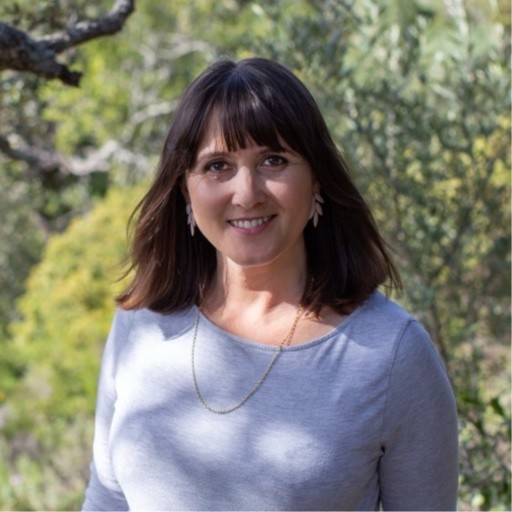
To explore this challenge, I sat down with Jen Stebbing, an independent communications consultant. She works at the intersection of climate and nature, focusing on how to build the trust and the narratives needed to get private capital (from carbon credits to forest finance) flowing into solutions. We discussed why hope, not fear, is the true catalyst for action, and why doubt may be a bigger barrier for action than technical complexity.
Can you start by explaining what you do?
I work as an independent communications consultant. I help to build trust and shape narratives for market-based nature and climate solutions. Examples of market -based solutions are the voluntary carbon market, forest finance, and nature tech. The main purpose of my work is to mobilize private capital towards solving our climate and biodiversity crisis.
Private capital is the only source of funding that is big enough to make a real difference, but to unlock it, we need to build trust and create a clear business case.
Why is that so important?
We're in a global crisis, and we simply don't have time to wait. Government funding isn't big enough or reliable enough to scale at the speed we need, and philanthropy, while catalytic, can't fill the gap either. Private capital is the only source of funding that is big enough to make a real difference, but to unlock it, we need to build trust and create a clear business case.
You specialize in communications. What are some challenges you're observing right now around this topic?
One of the biggest challenges I see is the narrative we use. There's a constant swing between catastrophic fear and cautious hope. I would always go for positivity. It's really important to have hope; it's the only way we move things forward. That said, as humans, we do have a negativity bias, and bad headlines sell newspapers and create clicks. I can see why people use fear to grab attention. But there's a critical difference: fear grabs attention, but it freezes people. If you look at too many negative things, you feel like you can’t do anything. Fear doesn't galvanize action. Hope, on the other hand, does galvanize action.
Another huge factor is doubt. I hear it all the time from companies: "Am I doing the right thing? Are people going to blame me for this? Is this aligned with where regulation is heading?" Because so much of this work is voluntary, the business case can be hard to make to a CFO, especially if you’re worried you might get criticized for it later.
So, the doubt isn't just about if they should act, but more about how to act in a (voluntary) unregulated space?
Exactly. This is why many forward-looking companies are now publicly asking to be regulated. Someone like Tony's Chocolonely is saying, "Regulate us, please!" They want to be told what to do because regulatory clarity makes it easier to do the right thing without that constant fear of greenwashing accusations.
Speaking of clarity, I recently spoke to Gavin Edwards about the push to establish "Nature Positive" as a clear North Star, similar to "Net Zero" for climate. How do you see the role of these big, simple terms?
I'm so glad Gavin and his team are doing that work; having a North Star is really valuable. The problem is that when you create a formal, simple term, it can become a target to be shot down. We saw this with "carbon neutral." For ages, it was a great North Star and a powerful business case for action. But because it had some integrity issues and was used in the wrong way, it became a perfect focus point for anti-market critics. It was gradually undermined until it’s almost unusable now, which is a shame. The lesson isn't to stop creating goals; it's that while we need a clear, simple goal, we also need a robust and transparent system of guardrails supporting it from day one to protect it from bad-faith attacks.
A CEO's tenure is often only 5 to 6 years [...]. This short-term focus doesn't always align with the 10-to-20-year timeline of business continuity, which is the scale at which nature risks occur.
You mentioned the difficulties in making the business case to a CFO. What have you learned about that challenge?
I think there is a fundamental mismatch in timelines. A CEO's tenure is often only 5 to 6 years, so they are naturally focused on what they need to do for a successful tenure. That short-term focus doesn't always align with the 10-to-20-year timeline of business continuity, which is the scale at which nature risks occur. The one thing that’s changing this is that the impacts of climate change are becoming so immediate that they are starting to affect those 3-to-5-year timelines. Suddenly, long-term resilience is a short-term problem.
So if companies are stuck between this deep-seated doubt and mismatched timelines, what can help give them the confidence to bridge that gap and act anyway?
The role of NGOs is critical, especially in providing legitimacy and what some call "air cover". When a company acts, especially in a voluntary space, they are nervous about being criticized. NGOs can give them the confidence that they are doing the right thing. My work with coalitions like Nature for Climate, for instance, includes a dedicated "trust-building workstream" to understand where the trust deficits still exist and actively build that confidence.
Can you give a concrete example of what that ‘air cover’ looks like in practice?
A good example was when the Environmental Defense Fund (EDF) stepped in to support Apple during a court case about their "carbon neutral" claims. That kind of validation from a credible, external NGO is invaluable for a company. It gives them the backing they need to defend their actions and continue moving forward.
This leads to a pragmatic question about strategy. Some argue separating nature and climate at first to give nature its own focus. But others say you should hitchhike on the mature carbon market to get biodiversity funded. What’s your take on this?
I agree with Gavin that they require different expertise; you can't just assume if you know climate, you know nature. But they are so intertwined that I believe it's a mistake to separate them. It's actually really positive for nature that it's being associated so much with climate, because for so long nature was seen as secondary. Now, companies are realizing their dependence on nature for resilience. So I think it's important to talk about them together, while still understanding they aren't synonymous.
You cannot fulfill your business objectives without a communication strategy that supports those objectives.
You've made a strong case for how critical strategic communication is in all of this. To make it effective, where should the communications function actually sit within a company?
Communications must sit strategically at the C-level, with the CEO and the board. All successful CEOs are good communicators. You cannot fulfill your business or organizational objectives without a communication strategy that supports those objectives. It has to be at the very top, integrated into the core strategy of the business from day one.
We use cookies to improve your experience on our site and to understand where our audience is coming from. To find out more, please read our Privacy Policy. By choosing I Accept, you consent to our use of cookies.